As climate change reshapes weather patterns across the globe, Indian agriculture is entering an era of greater uncertainty. With forecasts indicating a possible El Niño in 2026, the discussion is no longer limited to whether rainfall will be adequate. It is increasingly about how prepared farmers are to cope with unpredictable climatic conditions.
For millions of smallholder farmers, the monsoon is far more than a weather event – it determines cropping decisions, household incomes, food security, and livelihoods. A delayed onset of rains, prolonged dry spells, or unexpected heatwaves can disrupt entire farming seasons. While such challenges have always existed, climate change is making them more frequent and intense.
This raises an important question: How can India’s farming communities become more resilient to an increasingly uncertain climate?
Understanding El Niño: El Niño is a naturally occurring climate phenomenon caused by the warming of sea surface temperatures in the central and eastern Pacific Ocean. Although it originates thousands of kilometres away, it significantly influences weather systems worldwide, including India’s southwest monsoon.
Recent scientific forecasts have raised concerns about the emergence of a potentially strong El Niño event in 2026. For a country where nearly half of the cultivated area remains dependent on rainfall, such disruptions can have significant consequences.
Rather than responding to climate shocks after they occur, there is an increasing need to equip farmers, communities, and Producer Organisations with the knowledge, tools, and resources to anticipate, adapt to, and recover from climate-related risks.
As climate uncertainty becomes the new normal, building resilient agricultural systems is no longer an option – it is a necessity. This article explores the potential implications of El Niño for Indian agriculture and highlights how climate-smart agriculture, Farmer-Producer Organisations (FPOs), women-centric interventions, and community-led adaptation strategies can help farmers navigate an increasingly unpredictable future.
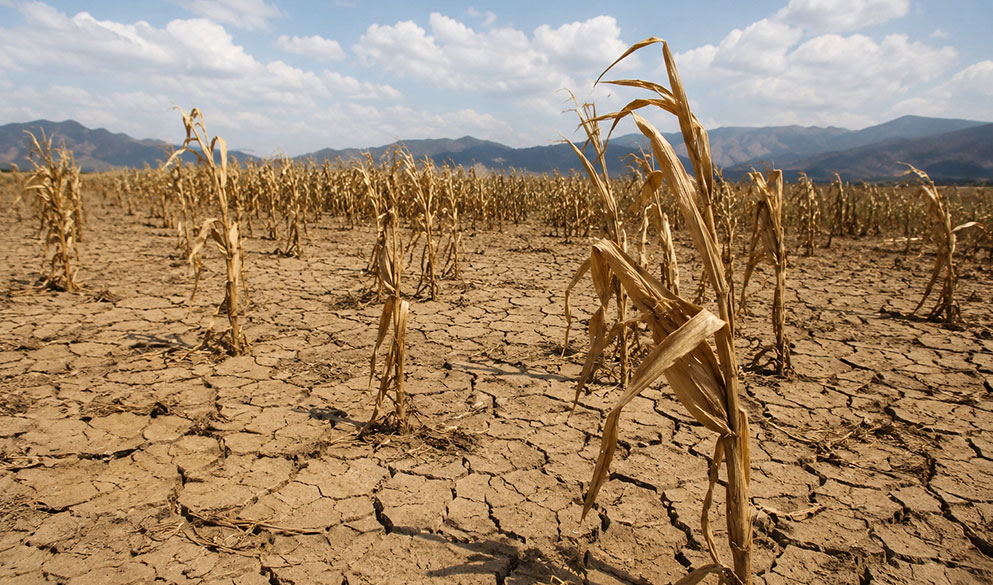
Historically, several major drought years in India – including 2002, 2009, and 2015- have coincided with El Niño conditions. These events have often been associated with weaker monsoons, below-normal rainfall, higher temperatures, and prolonged dry spells.
The consequences for agriculture can be significant. Nearly half of India’s cultivated land remains rainfed, making farmers highly dependent on timely and adequate rainfall. Research by the Indian Council of Agricultural Research (ICAR) has shown that during major El Niño years, paddy and maize yields declined by more than 10% in many districts, particularly across states such as Maharashtra, Madhya Pradesh, Chhattisgarh, Odisha, Bihar, Jharkhand, Andhra Pradesh, and Uttar Pradesh.
While forecasts cannot predict the exact intensity or local impacts of a future El Niño, they provide valuable early warnings. Rather than waiting for climate shocks to occur, farmers and institutions have an opportunity to strengthen preparedness and reduce future risks.
Why Vulnerability is Higher for Women Farmers
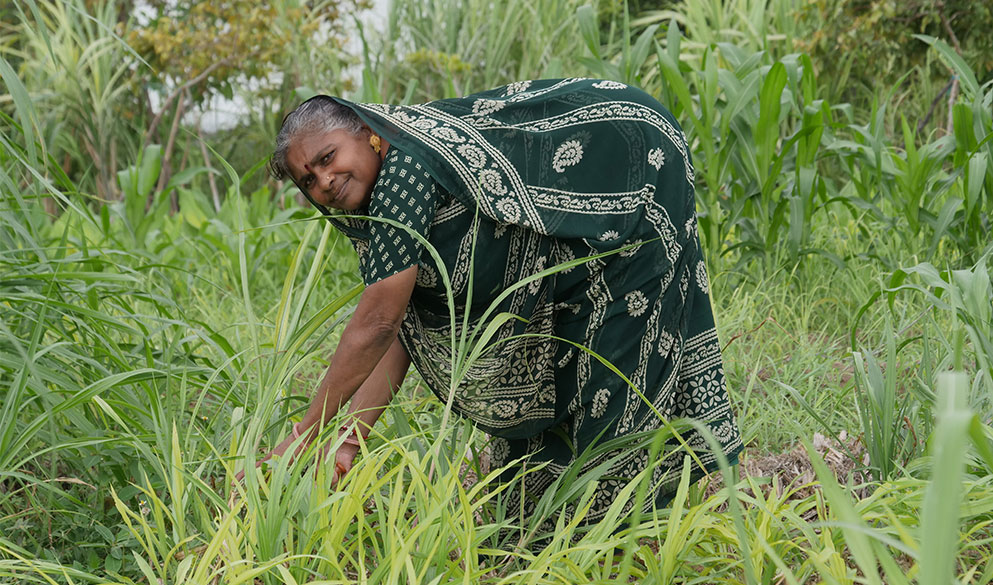
Climate change does not affect all farmers equally. While erratic rainfall, droughts, and heatwaves affect entire farming communities, women farmers often bear a disproportionate burden. Despite playing a critical role in agricultural production, women frequently have less access to land ownership, irrigation resources, credit, extension services, climate information, and agricultural technologies. As a result, their capacity to respond to climate shocks is often more constrained.
Climate variability can also intensify existing inequalities in access to productive resources. Research by the International Food Policy Research Institute (IFPRI) suggests that women farmers are less likely than men to receive timely weather information, agricultural advisories, or extension support, despite their active involvement in farming decisions. As climate risks become more frequent, this information gap can translate into lower adaptive capacity and higher livelihood vulnerability.
Climate-induced income losses often have disproportionate impacts on women. During periods of drought, crop failure, or food scarcity, women often shoulder the burden by reducing their own food intake, postponing healthcare, and sacrificing opportunities for education or skill development to meet household needs. According to UN WomenWatch, food insecurity and resource shortages often affect women’s and girls’ health more severely than men’s due to unequal access to food and other resources. These hidden costs of climate shocks can undermine women’s well-being and further constrain their ability to adapt to future climate risks.
Field experiences across India demonstrate that when women have access to knowledge, technology, and collective institutions, they are often among the first adopters of climate-resilient practices such as seed conservation, crop diversification, integrated farming systems, and natural resource management. Investing in women’s leadership and decision-making power, therefore, strengthens not only individual households but also the resilience of entire farming communities.
Can Farmer-Producer Organisations Strengthen Climate Resilience?
As concerns grow about the potential impacts of El Niño on agriculture, an important question emerges: how can smallholder farmers better prepare for and manage increasing climate uncertainty?
While no single intervention can eliminate climate risks, Farmer-Producer Organisations (FPOs) offer an interesting institutional model that may help farmers strengthen their adaptive capacity.
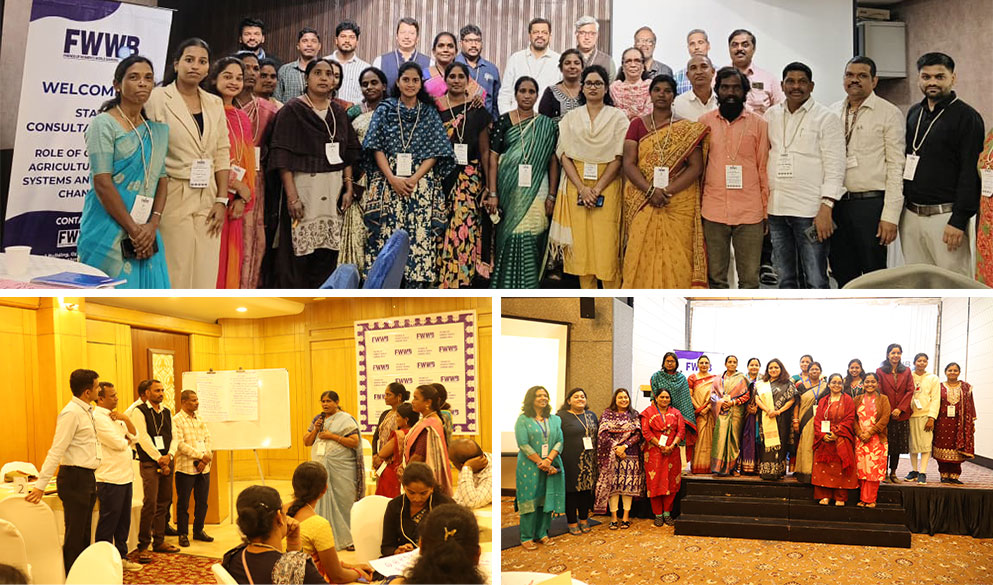
Over the past few decades, FWWB has worked with hundreds of producer organisations across the country. FPOs have primarily been viewed as vehicles for improving market access, reducing input costs, and enhancing farmer incomes. However, climate variability is expanding the role these organisations can potentially play. Their ability to aggregate farmers, facilitate knowledge exchange, and provide access to services suggests they could also serve as platforms for climate adaptation and risk management.
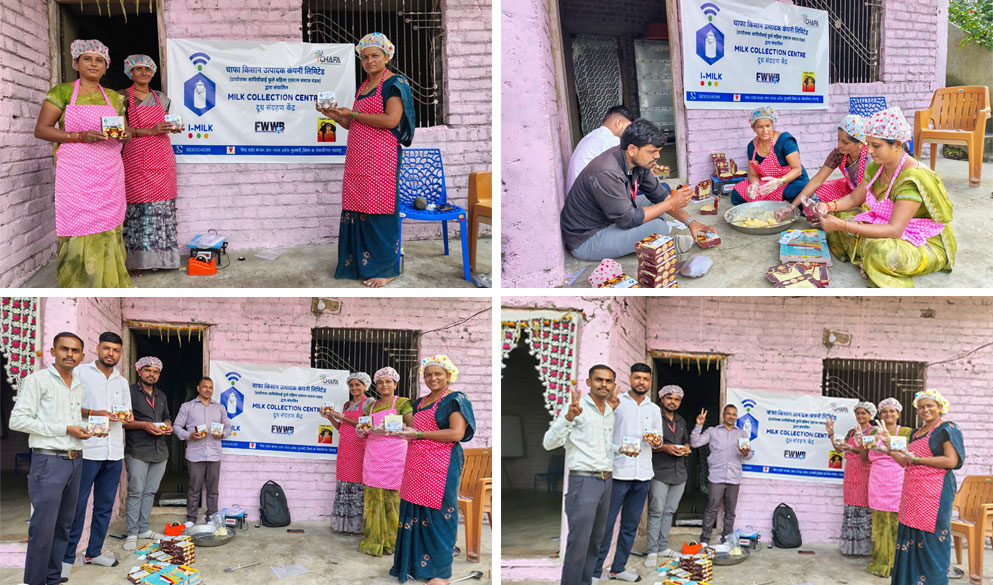
FPOs can also play a crucial role in helping farmers respond to delayed or erratic monsoons. For example, if rainfall is significantly delayed due to El Niño or other climatic events, FPOs can facilitate timely advisories on alternative crops, drought-tolerant or late-sowing varieties, and other climate-smart practices suited to local conditions. Platforms like AgCane, Plantix, and Digital Green are now precisely providing weather and crop information to farmers. FPOs may be well-positioned to disseminate such information and support collective decision-making at the community level. Such interventions can help farmers adapt their cropping decisions and reduce the risk of major crop failure. Similarly, additional livelihood opportunities promoted through FPO’s may generate additional income for farmers.
Beyond providing advisories, regular engagement with farmers helps build a resilient local ecosystem where communities gradually learn to anticipate climate risks, test locally relevant solutions, and make informed decisions. In this context, the value of FPOs extends beyond business and value chain development, they can also serve as trusted platforms for strengthening climate resilience and long-term sustainability.
As climate uncertainty becomes more frequent, exploring the potential of collective institutions such as FPOs may offer valuable insights into how farming communities can better anticipate, absorb, and adapt to future shocks. While the effectiveness of such approaches will depend on local contexts and capacities, they represent an important area for continued learning, innovation, and investment.
Beyond Forecasts: Can Technology and Climate-Smart Agriculture Help Farmers Navigate Climate Uncertainty?
As climate variability increases, farmers need to move beyond reacting to weather events and start anticipating them. Advances in weather forecasting, remote sensing, artificial intelligence (AI), and digital advisory services are enabling the delivery of location-specific recommendations for sowing, irrigation, nutrient management, and pest control. These tools can help farmers make better-informed decisions based on weather forecasts rather than relying solely on historical patterns.
Climate-smart agricultural practices also offer practical pathways for reducing risk. Crop diversification, integrated farming systems, conservation agriculture, efficient water management, and soil moisture conservation can help farmers withstand erratic rainfall and rising temperatures while sustaining productivity. Water-saving interventions such as rainwater harvesting, farm ponds, and micro-irrigation, along with climate-resilient crop varieties, are particularly relevant in the context of a potential El Niño event.
FWWB’s field pilots also indicate that combining digital advisories with community-based extension can improve farmers’ preparedness. However, technology alone cannot eliminate climate risk. Its effectiveness depends on accessibility, affordability, farmer awareness, and strong institutional support. Building resilience, therefore, requires integrating technological innovations with climate-smart practices and community institutions.
Emerging Lessons from the Field: What Does Climate Resilience Look Like in Practice?
Field experiences show that climate resilience is built through a combination of knowledge, technology, strong institutions, and local leadership rather than through any single intervention.
Several important lessons are emerging. First, preparedness is more effective than responding after a crisis. Farmers with access to timely information, water conservation measures, diversified livelihoods, and strong community institutions are generally better equipped to cope with climate shocks.
Second, collective learning matters. Farmer Field Schools, peer-learning networks, and Producer Organisations enable farmers to test, share, and adopt locally relevant adaptation practices while combining scientific advisories with indigenous knowledge.
Third, resilience must be inclusive. As women play an increasingly central role in agriculture, ensuring their access to information, finance, extension services, and leadership opportunities is essential for strengthening household and community resilience.
Finally, climate resilience requires an integrated approach. Beyond crop production, it depends on healthy soils, water security, diversified livelihoods, financial inclusion, and strong local institutions. Together, these elements help farming communities adapt to an increasingly uncertain climate.
Looking Ahead: From Climate Risk to Climate Resilience
Whether the anticipated 2026 El Niño event will develop into a severe climatic shock remains uncertain. Climate systems are inherently complex, and their impacts vary across regions, crops, and communities. However, one reality is becoming increasingly clear: climate variability is no longer an occasional disruption but an emerging feature of the agricultural landscape.
For India’s smallholder farmers, the challenge extends beyond managing a single season of erratic rainfall or drought. It is about adapting to a future where weather patterns may become increasingly unpredictable, requiring new approaches to risk management, resource use, and livelihood planning.
While there may be no single solution to climate risk, evidence increasingly suggests that resilience is built through a combination of informed decision-making, sustainable resource management, inclusive institutions, continuous learning, and a strong local ecosystem that connects farmers with timely knowledge, technology, finance, markets, and extension support. Preparing for climate uncertainty will require coordinated efforts from farmers, producer organisations, researchers, development practitioners, policymakers, and the private sector.
As India navigates an increasingly uncertain climate future, the question may not simply be whether another strong El Niño will occur, but whether agricultural systems are becoming resilient enough to withstand the challenges ahead.
Authored by:

Lakhan Patidar
Programme Lead, Agriculture Capacity Building and Climate Change
Lakhan Patidar leads agriculture capacity building and climate change initiatives, focusing on strengthening Farmer Producer Organisations, promoting climate-resilient practices, and improving access to finance and markets. He holds a Master’s degree in Agronomy and has worked with organisations such as ASA, Samarthan, and GGGI. His experience spans agriculture value chains, watershed development, PES, and gender-responsive Programmeming. Lakhan collaborates closely with community institutions, financial service providers, and government stakeholders to design scalable, sustainable livelihood solutions.