India faces a critical moment due to its reliance on agriculture and the growing pressures of climate change. With unpredictable rainfall, rising temperatures, and unstable cropping systems, the effects of climate change are increasingly evident on agricultural lands, particularly impacting women. Women are the backbone of Indian agriculture, contributing significantly to food systems, biodiversity, and household nutrition. Yet, their roles often go unrecognised and undervalued.
Organisations like Friends of Women’s World Banking (FWWB) play a key role in supporting women farmers’ empowerment, improving their access to financial and knowledge resources, and helping them lead climate-resilient agricultural changes throughout India.
The Invisible Backbone of Indian Agriculture
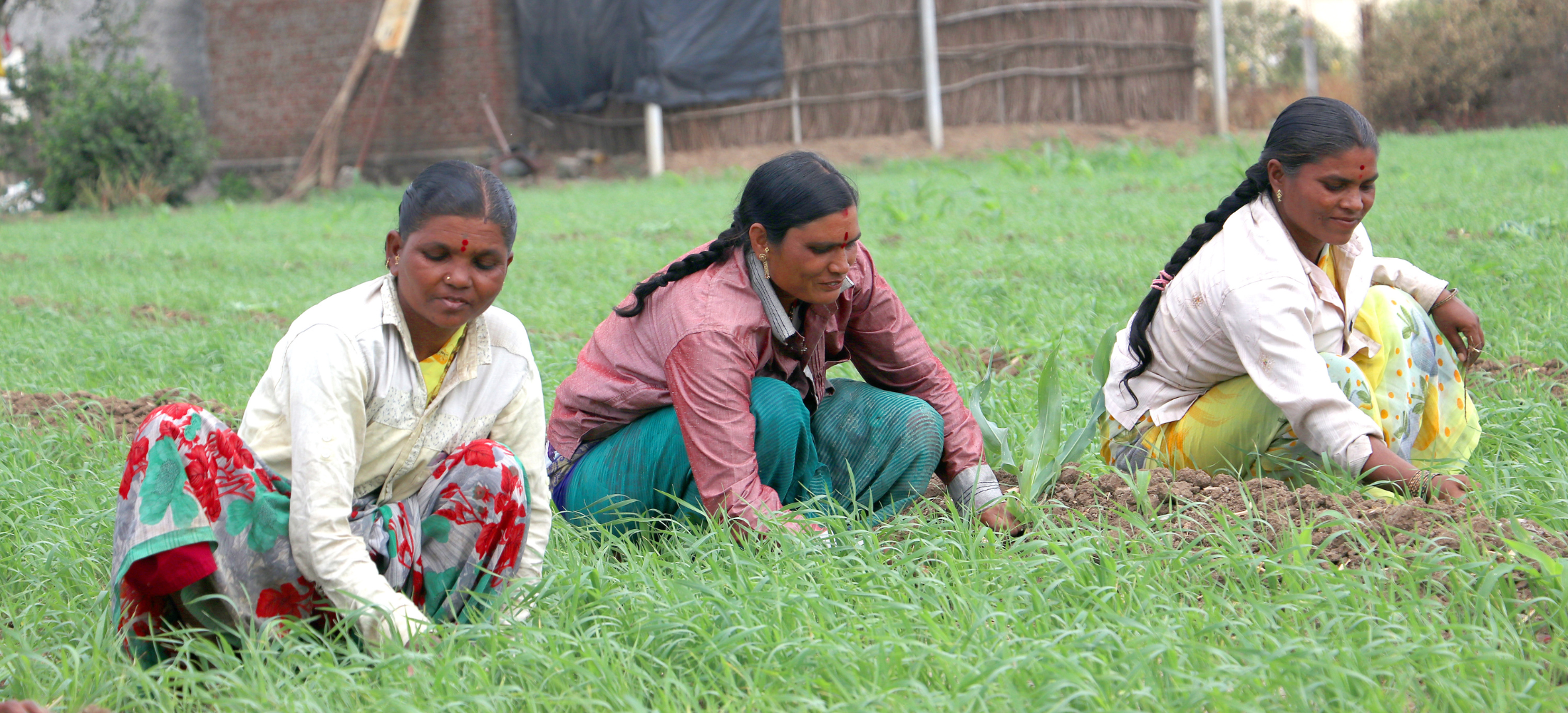
Women make up a large share of India’s agricultural workforce, performing almost 80% of all farm tasks, including sowing, transplanting, weeding, preserving seeds, processing crops after harvest, and managing livestock. In certain states, women account for over 60% to 75% of the agricultural labour force, making them vital to rural livelihoods and food security.
Despite this, their contributions are often restricted by:
Limited Land Ownership
Only 12.8% of operational landholdings in India are owned by women. Without land titles, they find it hard to access institutional credit, crop insurance, irrigation support, and government agricultural programmes.
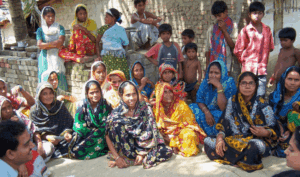 Restricted Access to Financial Services and Technology
Women struggle to obtain credit or adopt farming technologies due to deep-rooted gender biases.
Low Representation in Decision-Making and Governance
Although women manage significant agricultural production, they rarely participate in farmer-producer organisations (FPOs), local planning councils, or agricultural policy discussions.
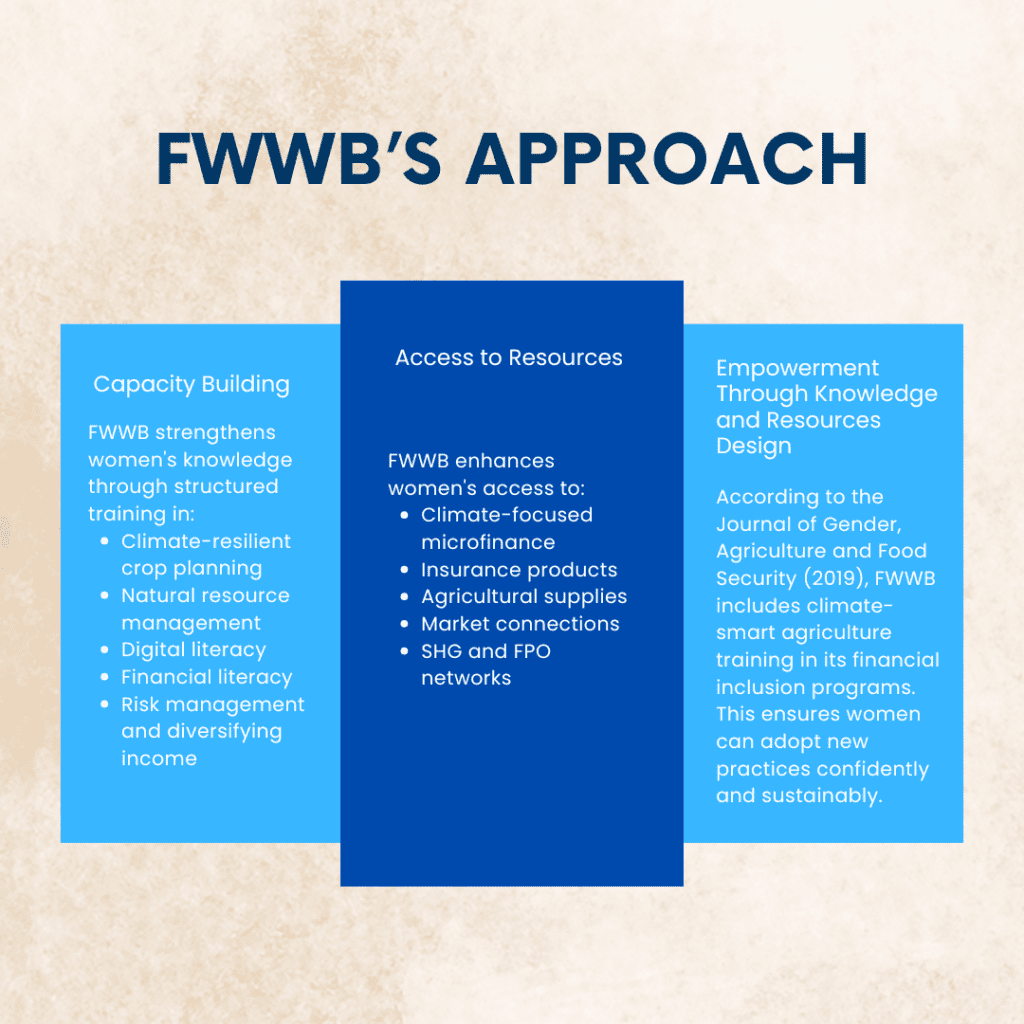
FWWB consistently addresses these barriers by enhancing women’s access to credit, strengthening self-help group (SHG) networks, providing training for farming practices, and empowering women as community leaders.
Why Is India So Vulnerable to Climate Change?
India’s vulnerability to climate change stems from its reliance on monsoon rains, its large agrarian population, the depletion of natural resources, and exposure to frequent climate events such as droughts, floods, and heatwaves. Agriculture, which employs over half the population, mainly depends on rain and is sensitive to climate fluctuations. Rural women, with limited financial resources and heavier workloads, face the toughest impacts.
Gendered Impact of Climate Change
Climate change affects women disproportionately by:
- Increasing their workload due to water shortages, crop failures, and loss of forests.
- Heightening food insecurity in households headed by women.
- Reducing their ability to adapt because of limited access to credit, land, and training.
Studies by ICAR (2021) and IFPRI indicate that women living in climate-vulnerable areas, such as Odisha and Bihar, experience more severe impacts on their livelihoods and have fewer resources to recover from climate shocks.
The Role of Women in Climate-Resilient Agriculture
It’s important to understand why women are well-suited to lead in climate-resilient agriculture:
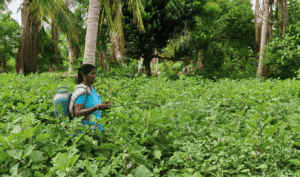
They are custodians of traditional knowledge.
Women have deep knowledge of seed selection, organic practices, seasonal farming practices, water management, medicinal plants, and local crop varieties.
They manage household food security.
Women coordinate nutrition, planting cycles, and resource use, which are crucial for climate resilience.
They adopt sustainable practices more quickly.
Research shows that women farmers are often more inclined to use organic methods and agroecological practices, focusing on health and environmental sustainability and on leveraging traditional knowledge.
They drive change throughout their communities.
Through SHGs, informal connections, and collectives, women have a strong impact on rural ecosystems.
Impact and Evidence
A study published in the Journal of Gender, Agriculture and Food Security (2019) found that when women received training in climate-smart agriculture (CSA), like water-efficient farming, organic practices, pest management, and crop diversity, their yields increased by up to 22%, significantly improving food security. Women with access to SHGs and community resource centres were more likely to adopt:
- Millet cultivation
- Weather-based planting decisions
- Organic fertilisers
- Rainwater harvesting
- Mixed cropping systems
This shows the transformative power of women-led climate initiatives.
Examples of Women-Led Climate-Resilient Farming
The Millet Sisters, Andhra Pradesh
Women-led groups revitalised millet farming in areas where crops require more water. With training in marketing and value addition, these women boosted their incomes, nutrition, and community resilience.
Radha’s Journey with FWWB’s Sustainable Farming Initiative
Radha Rojasara, a groundnut farmer from Amreli, built climate resilience by diversifying into moringa after joining an FWWB–Suprāja Foundation project. With training in sustainable cultivation and value addition, she established her own processing unit. Her 360 moringa trees now provide a steady income through seeds and leaf powder sold across villages. Expanding her ‘Dhara’ brand under Krishna Enterprise, Radha is boosting her livelihood while promoting nutritious, climate-resilient produce in her community.
Challenges Faced by Women
- Limited land ownership
- Poor access to credit, irrigation, and farming supplies
- Lack of extension services
- Social norms that restrict decision-making
- High unpaid labour burdens
FWWB’s approach
Policy and Institutional Interventions
To enhance gender-responsive climate action, India needs to strengthen:
- Implementation of NMSA and MKSP with specific goals for women
- Women-led FPOs with dedicated incentives
- Local trainers and resource centres for essential skills
- Gender-disaggregated data collection in agriculture
- Financial products tailored for climate adaptation and women farmers
FWWB has shown that when financial and institutional support align with women’s needs, uptake of climate-friendly practices rises significantly.
Women-Led Initiatives:
Vanastree, Karnataka
Women-led seed savers are preserving over 100 local varieties, promoting biodiversity and organic farming.
Jal Sahelis, Bundelkhand
Women revitalised traditional water bodies, improving irrigation and reducing labour.
Koraput Coffee, Odisha
Tribal women grow premium Arabica coffee through cooperative efforts, boosting ecological and economic resilience.
These stories demonstrate how women’s leadership fosters sustainable, climate-friendly rural futures.
The Way Forward
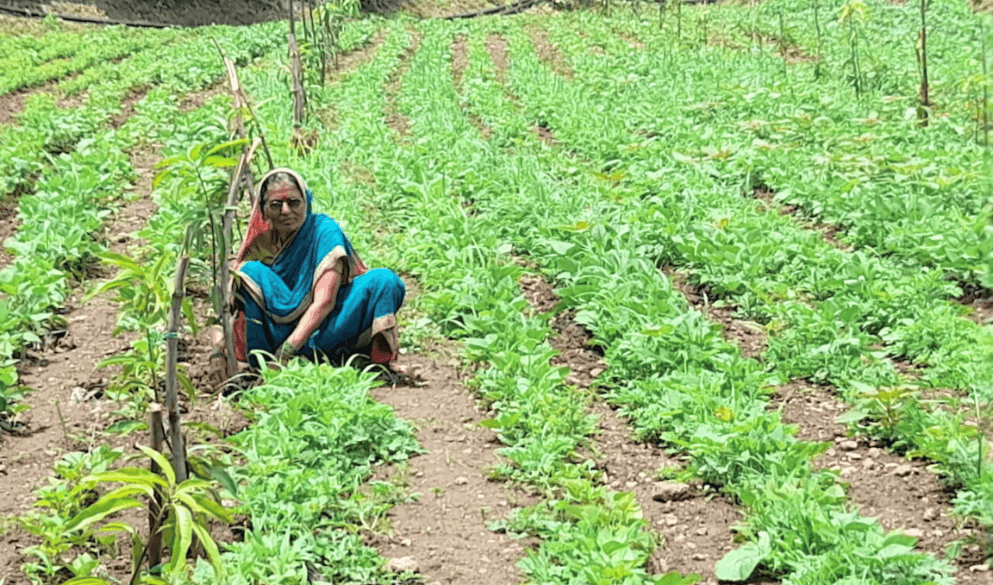 A climate-resilient agricultural future for India must focus on empowering women. This requires:
- Enhancing their access to land, credit, and training
- Expanding women-led FPOs and agricultural enterprises
- Incorporating gender considerations into climate policy
- Investing in digital tools, climate information services, and financial products for women
- Supporting organisations like FWWB that create systems for women’s leadership
Empowering women in Indian agriculture is not just about gender equity; it is also essential for environmental sustainability. By improving their skills in agroecology, digital literacy, and climate finance, we can develop more sustainable food systems. Collaborative efforts among research institutions, grassroots groups, and women’s collectives can enable scalable, climate-resilient innovations.
As India moves toward its climate goals, placing women farmers at the forefront of agricultural resilience is crucial for achieving inclusive, equitable, and future-oriented sustainable development.